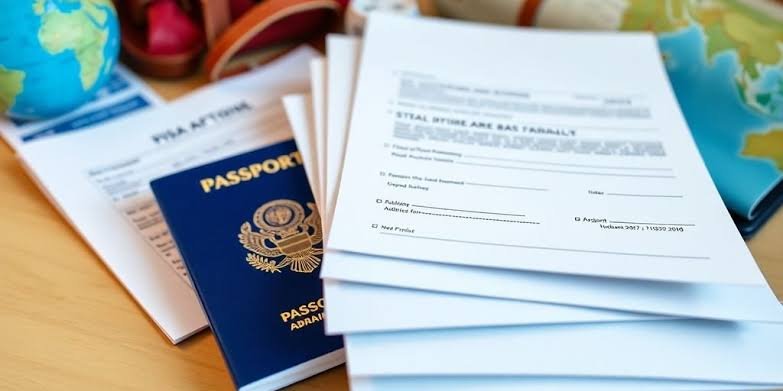
A friend’s visa application got delayed by six weeks last year because of one missing bank statement page. Six weeks — during peak admission season. If you’re gearing up for applications, having a complete study abroad documents checklist ready well in advance isn’t just helpful, it’s genuinely necessary.
What Documents Are Essential for Study Abroad Applications
Short answer: a solid study abroad documents checklist covers academic transcripts, standardized test scores (IELTS/TOEFL/GRE/GMAT as applicable), a Statement of Purpose, Letters of Recommendation, financial proof, and a valid passport — each with specific formatting and attestation requirements depending on the destination country.
Academic Documents You’ll Need First
Start collecting these early, since some take weeks to process through your institution.
- Class 10 and 12 mark sheets and certificates
- Bachelor’s degree mark sheets, semester-wise (for master’s applicants)
- Provisional/original degree certificate
- Transcript from your university, often needed in a sealed envelope directly from the institution
Standardized Test Scores and Their Validity
Most destinations require proof of English proficiency, and some also need subject-specific standardized tests.
- IELTS or TOEFL — required by UK, Canada, Australia, and most US universities
- GRE — commonly needed for US master’s programs, especially in STEM fields
- GMAT — required for most MBA programs globally
- Duolingo English Test — increasingly accepted as a faster, cheaper alternative
Keep in mind these scores typically expire after two years, so timing your test relative to your application deadline matters.
[link to related guide on how to choose country to study abroad here]
Statement of Purpose and Letters of Recommendation
Your SOP is arguably the most personal document in the entire application, and it’s where generic templates hurt you the most. Admissions committees read hundreds of these — a specific, honest narrative about your goals stands out far more than impressive-sounding but vague language.
For Letters of Recommendation, request them at least 4-6 weeks before your deadline. Professors and employers are busy, and a rushed recommendation letter often reads as generic.
Financial Documents: The Section That Trips Up Most Applicants
This is where I’ve seen the most avoidable delays happen. Visa officers scrutinize financial proof heavily, and incomplete documentation is a leading cause of rejections.
Typically required:
- Bank statements for the last 6 months (personal or sponsor’s account)
- Education loan sanction letter, if applicable
- Fixed deposit certificates, if used as financial proof
- Affidavit of support from sponsor, notarized
Passport and Visa-Specific Documents
Your passport should have at least 6 months validity beyond your intended stay, ideally longer. If yours is close to expiring, renew it before starting the visa application process — don’t wait until the last month.
Additional visa-specific documents often include:
- Confirmation of Acceptance for Studies (CAS) for UK applications
- I-20 form for US F-1 visa applicants
- Letter of Acceptance for Canadian study permits
[link to related guide on education loan for study abroad here]
Medical and Health-Related Documents
Several countries now require proof of medical fitness or specific vaccinations before visa approval.
- Medical examination report from an approved panel physician (common for Australia, UK)
- Health insurance proof, sometimes mandatory before visa issuance
- COVID-19 vaccination certificate, still requested by some institutions
Document Attestation and Translation Requirements
If any of your documents aren’t in English, they’ll need certified translation. Some countries also require apostille attestation on academic documents — this process alone can take 2-3 weeks through the Ministry of External Affairs, so don’t leave it for the last minute.
Building Your Personal Document Timeline
Here’s a realistic timeline that’s worked well for students I’ve guided informally:
- 6 months before deadline: Start test prep (IELTS/GRE), request academic transcripts
- 4 months before: Finalize SOP drafts, request recommendation letters
- 2 months before: Complete financial documentation, begin apostille process if needed
- 1 month before: Final visa document compilation and appointment booking
FAQ
How long does document attestation take in India? Apostille attestation through the MEA typically takes 2-3 weeks, though this can extend during peak application seasons.
Do all countries require GRE for master’s programs? No — GRE requirements vary by university and program, and many are waiving it, especially for non-STEM fields. Check specific program requirements.
Can I use the same Statement of Purpose for multiple universities? You can use a base structure, but each SOP should be tailored to the specific university and program to be genuinely effective.
What if my bank statement doesn’t show sufficient funds? Consider an education loan sanction letter as supplementary financial proof, or add a sponsor’s financial documents alongside your own.
Is health insurance mandatory for all study abroad destinations? It’s mandatory in several countries like Australia and increasingly expected elsewhere; check specific visa requirements for your destination.
Conclusion
Getting your study abroad documents checklist sorted months in advance, rather than scrambling in the final weeks, genuinely reduces stress and prevents the kind of delays that can cost you an entire intake cycle. Start with academic documents and test scores early, since those take the longest lead time. Keep both physical and scanned digital copies of everything organized in one folder — future you will be grateful during the actual visa interview crunch.
Suggested image alt text:
- “Checklist of study abroad documents laid out on desk with passport”
- “Student organizing academic transcripts for study abroad application”
- “Financial documents and bank statements for study abroad visa application”